
THANK YOU FOR SUBSCRIBING
× 
Food and Beverage Tech Review Weekly Brief
Be first to read the latest tech news, Industry Leader's Insights, and CIO interviews of medium and large enterprises exclusively from Food and Beverage Tech Review
Food and Beverages Tech Review: Specials Magazine
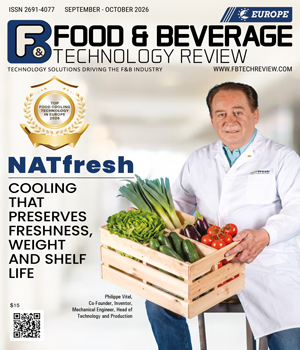
NATfresh
Cooling that Preserves Freshness, Weight and Shelf Life
Freshness fades gradually, almost imperceptibly at first, yet the cost begins the moment food leaves its point of origin to be cooled and prepared for transportation. A lettuce head cut in the field, grapes waiting before pressing, fish landed at the harbour, meat moving through a processing line and meals prepared in commercial kitchens all remain biologically active after production. They continue to release heat, shed moisture and deteriorate. As internal cell water pressure weakens, texture softens, flavour loses definition, weight declines and shelf life shortens. The NATfresh Cooling technology was designed to slow that decline, but much of the industry still relies on a blunt, surface based method. Conventional systems force cold air onto the exterior and wait for the centre to cool in its own time. Many also use vacuum cooling. The product loses moisture as it cools, while the core stays warmer for longer. It may complete the cold chain, yet it arrives with reduced structural integrity, diminished flavour and lower commercial value than it had at harvest. NATfresh, based in Vissoie, Switzerland, begins from a different premise—cooling does not need to work against the product from the outside. Its patented saturating vapour pressure process, together with quantum physics and thermodynamics, acts directly on the water molecules in the air surrounding the food and the ones within the food itself, cooling the entire mass uniformly in 15 minutes. The cold develops from within, preserving cell walls and maintaining the turgidity that protects texture, flavour, weight and structural strength.
Food Ordering
Feed Me Online
The Digital Strategy Transforming Independent Takeaway Profitability
Matthew Elliston, Director
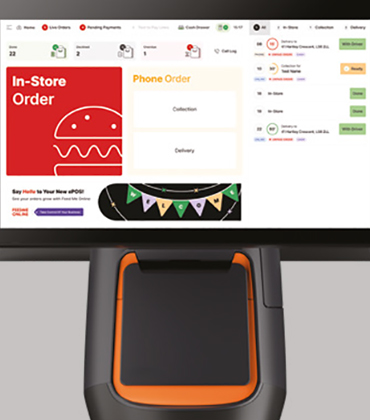
Digital ordering gives independent takeaways new ways to grow, yet rising energy prices, wage costs, and inflation have placed growing pressure on their margins. Those pressures become harder to absorb when third-party platforms take a significant share of each order while offering limited control over the customer relationship. Solving this requires a shift from simply accessing digital demand to owning it, helping takeaway owners build profitable, independent businesses with stronger customer connections. Feed Me Onlinehas built its business around the principle that technology should support that independence, helping takeaways grow through direct ordering while retaining greater control of their customers and margins. Since 2008, it has developed technology and services that help takeaway owners run their digital channels, understand their customers, promote their menus, and keep more value from each sale. “We put ourselves in the takeaway owner’s shoes and always try to do what is best for them. We keep our costs as low as possible so we can pass those savings on to takeaways, which can then be passed on to their customers,” says Matthew Elliston, director..
Food Safety
Unisensor
Shaping the Future of Food Diagnostics in Europe and Beyond
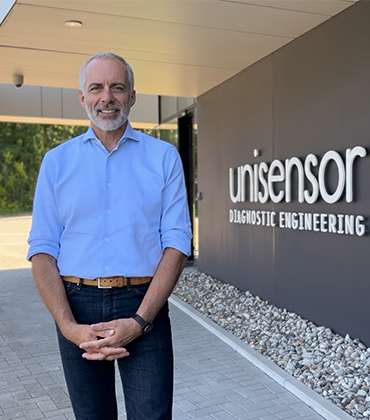
Dr. Benoît Granier, Founder and CEO
For nearly three decades, Unisensor has stood at the forefront of food diagnostics in Europe, reshaping how the dairy and food industries approach safety, compliance, and quality. Founded in 1997 by Belgian biochemist Dr. Benoît Granier, the company started as a spin-out from the University of Liège. “We began with a simple idea to move testing out of the central lab and closer to where decisions are made,” Dr. Granier recalls. That founding vision continues to define the company’s approach today. From the outset, Unisensor has built a reputation for delivering fast, reliable, and user-friendly testing kits that combine European build quality with practical, field-ready design. Its portfolio, including DipSensor, TwinSensor, Aurox, Extenso, and Beadyplex, covers the entire dairy chain, from farms and collection points to factories and laboratories. Today, Unisensor serves a diverse client base that includes dairy processors, cooperatives, intake labs, veterinary practices, and confectionery producers. The product line is built for purpose and validated against strict regulatory frameworks worldwide such as EU MRLs, Codex, and local importer rules. DipSensor, a pocket-sized, no-pipette test, provides clear go-or-no-go results in under ten minutes, making it ideal for farm and field use. TwinSensor screens for two major antibiotic families simultaneously, supporting routine checks at intake. For plants requiring higher throughput, the award-winning Aurox automates incubation and reading in three minutes, feeding results directly into management systems. Extenso extends the detection panel to over 100 contaminants, helping cheese producers avoid costly fermentation failures, while Beadyplex enables multiplex screening across ten antibiotic groups in various food matrices. Together, these solutions embody Unisensor’s mission of simplifying workflows while ensuring regulatory compliance. By focusing on compatibility, the company ensures that its readers and software work seamlessly across multiple tests, reducing training time, simplifying maintenance, and unifying data. This design philosophy reduces costs while also enhancing traceability, enabling producers to meet the highest standards of compliance. Unisensor also addresses recurring consistency, speed, and traceability bottlenecks in testing by providing solutions that fit directly into existing workflows. Whether it is screening raw milk at intake, protecting starter cultures in cheese production, or maintaining lean staffing at plants, the company’s tests are engineered to streamline processes. Results are digitally logged with full identifiers, allowing teams to support audits, analyze trends, and connect seamlessly to ERP or LIMS systems. In practice, this translates to fewer disputes, reduced waste, and greater confidence in release decisions. Innovation remains central to the company’s growth. By keeping development cycles short and engaging directly with intake labs and plant QA teams, Unisensor rapidly adapts its products to evolving industry needs. Its scientific focus on immunoassay chemistry, multiplex formats, and automated reading enhances sensitivity, selectivity, and repeatability.
Food Packaging
A Good Food Regulatory Framework to Ensure Consumer Safety and Industry Innovation
Celia Martin, Director Regulatory Affairs & Health Ingredients Innovation Manager, Lallemand
Winery

A Disruptive Time for the Wine Industry
Nicolas PELLENC, Head of Wine Purchasing and Procurement, Les Grands Chais de France
Food Supply Chain

Why Restaurant Technology Should Be Designed For People, Not Just Performance
Brianne (Lane) Harvey, Director of Process + IT, Apicii Hospitality
Food Safety

Digitalisation and Responsibility: Innovations for Animal Welfare, Sustainability and Integrity in the Meat Supply Chain
DR VERONIKA WEBER, CHIEF SUSTAINABILITY OFFICER, VION FOOD GROUP
Food Safety

How To Harness Our Food Travel Expertise To Create Healthy And Sustainable Choices For Travelling Customers
Verity Lawson, Group Sustainability Director, SSP Group

IN MY OPINION
Food Supply Chain
Cultivating a Positive Force for Change at Bidfood UK
Julie Owst, Head of Sustainability, Bidfood Uk
LAST WORD
Winery
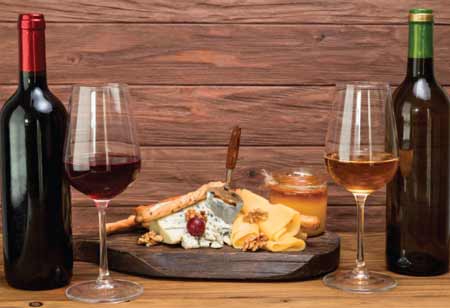
Exploring the art of Wine and Food Pairing: A Gateway to New Experiences
Angelos Kyrousis, Hotel Manager, Virgin Hotels
IN FOCUS
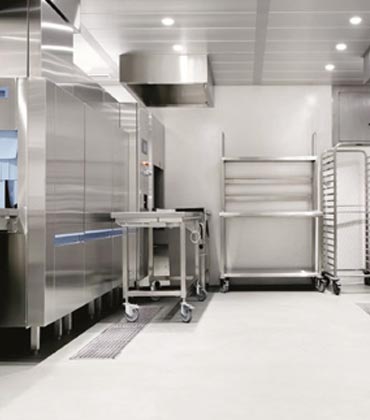
Optimizing Multi-Brand Strategies: The Essential Role of Cloud Kitchens in Europe
Cloud kitchen platforms help multi-brand food businesses reduce costs, centralise operations, scale faster, maintain consistency, and expand efficiently across Europe.
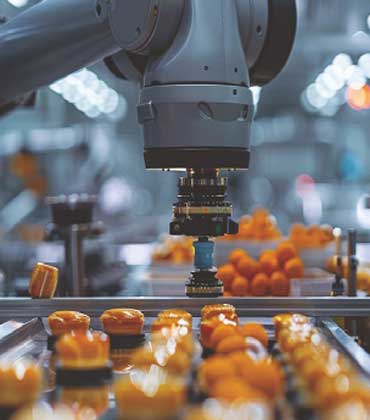
Europe's Food Industry: Embracing Automation for Quality and Sustainability
European food production lines advance through automation, traceability, and sustainability, delivering flexible, efficient manufacturing while meeting high-quality standards.
EDITORIAL
Cooling Innovation Meets Industry Leadership
Food and beverage businesses are navigating a demanding landscape where freshness, waste, energy use and supply resilience increasingly shape everyday decisions. This edition of Food and Beverage Tech Review Europe looks at how innovation and leadership are helping the industry respond to these pressures.
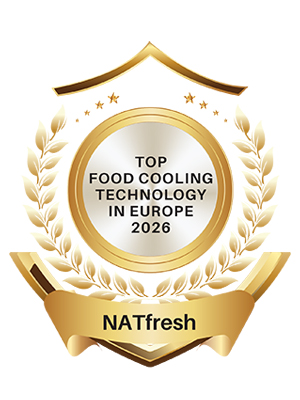
The issue spotlights NATfresh, which is taking a different approach to food cooling with a patented process that works on water molecules within and around food, cooling the entire mass uniformly in 15 minutes. The technology is designed to preserve moisture, texture, flavour, weight and nutritional value while using up to 80 per cent less energy than conventional systems. More than 1,000 products have gone through its trials, spanning produce, fruit, meat, fish, cheese, flowers and prepared meals. For its work, NATfresh has been named the Top Food Cooling Technology in Europe 2026.
The edition’s CXO perspectives bring a wider view of the challenges facing the industry. Nicolas Pellenc, Head of Wine Purchasing and Procurement at Les Grands Chais de France, examines the simultaneous decline in wine consumption and production, pointing to changing demand, weather uncertainty, rising costs and vineyard reductions. Julie Owst, Head of Sustainability at Bidfood UK, looks at governance, responsible sourcing and the challenge of turning sustainability ambitions into practical action. She also highlights the role of better product carbon-footprint data and cross functional collaboration.
Together, these perspectives reflect an industry that must turn complex pressures into practical decisions. Explore the stories for a closer look at the ideas and leadership shaping a more resilient and resource-conscious food and beverage sector.
Top
