
Digital Platforms Transforming Global Foodservice Procurement Ecosystems
Digital Platforms Transforming Global Foodservice Procurement Ecosystems

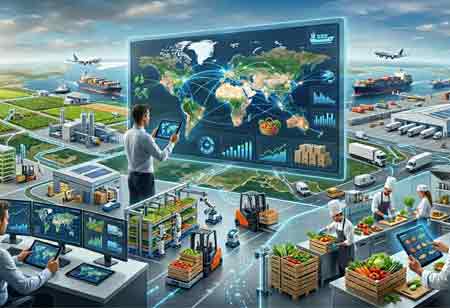
The foodservice e-commerce platform market has become an essential part of modern supply chain ecosystems. It facilitates efficient and seamless interactions among suppliers, distributors, and institutional buyers, such as restaurants, hotels, and catering providers. As digital transformation accelerates across various industries, foodservice organizations are moving away from traditional procurement methods and embracing integrated, platform-driven solutions. These platforms combine ordering, inventory management, logistics coordination, and analytics into cohesive systems, allowing businesses to operate with greater visibility, control, and agility.

Structuring Commerce in Foodservice: A New Standard for Digital Trade
Structuring Commerce in Foodservice: A New Standard for Digital Trade

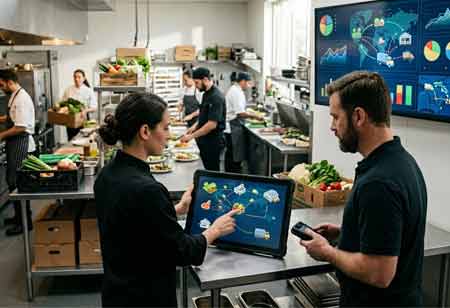
Foodservice distribution has long operated under constraints that limit the effectiveness of digital transformation. Transactions move across manufacturers, distributors and operators through fragmented systems, often supported by analog workflows and inconsistent product data. Digital tools layered on top of this environment tend to replicate inefficiencies rather than resolve them. The result is a sector where ordering remains cumbersome, visibility is limited, and decision-making lacks precision despite the scale of activity. 

Innovative Beverage Service: How Automation Enhances Hygiene and Experience

Innovative Beverage Service: How Automation Enhances Hygiene and Experience

The food and beverage sector is redefining cleanliness standards as consumer expectations evolve. Draft beer service has traditionally relied on manual taps and repeated physical contact between staff and equipment. While proper cleaning protocols have long supported safe operations, heightened awareness around hygiene has accelerated the adoption of touchless and automated draft beer dispensing systems. These innovations are reshaping beverage service by reducing surface contact, improving operational efficiency, and reinforcing customer confidence in shared environments.

The Rise of Data-Led Food Waste Digestion in Commercial Kitchens

The Rise of Data-Led Food Waste Digestion in Commercial Kitchens

Food waste has become one of the most persistent cost and sustainability challenges facing large-scale kitchens, galleys and institutional foodservice operations. Disposal practices that once felt routine now sit under tighter regulatory oversight, sharper ESG scrutiny and rising operational expense. Executives evaluating modern food waste digestion solutions are no longer focused only on diversion rates. Attention has shifted toward how waste is handled at the point of generation, how environmental claims are substantiated and how waste intelligence feeds broader decision-making across procurement, menu design and compliance reporting.

Cloud-Connected Food Digesters Redefine Organic Waste Operations

Cloud-Connected Food Digesters Redefine Organic Waste Operations

Across commercial kitchens, institutional campuses, and municipal waste programs, cloud-connected aerobic food digester solutions have moved from pilot curiosity to operational infrastructure. Their rise reflects a broader recalibration in how organizations treat organic waste: no longer as a back-of-house afterthought, but as a data-rich operational stream tied to sustainability targets, cost control, and regulatory readiness. Digital oversight layered onto on-site digestion has shifted conversations from disposal volumes to performance metrics, uptime, and optimization.

Rethinking Draft Beer Economics at Scale

Rethinking Draft Beer Economics at Scale

In food and beverage environments, draft beer service is less about spectacle and more about throughput, margin protection and staff deployment during peak windows. From a stadium to a dive bar, almost all concepts generate the majority of their revenue in compressed periods of demand. In those moments, seconds matter. The method by which a pint is poured can either constrain service capacity or unlock incremental sales that would otherwise be lost to wait times and distracted staff.

Top