THANK YOU FOR SUBSCRIBING

× 
Food and Beverage Tech Review Weekly Brief
Be first to read the latest tech news, Industry Leader's Insights, and CIO interviews of medium and large enterprises exclusively from Food and Beverage Tech Review
Food and Beverages Tech Review: Specials Magazine
My professional journey has been a dynamic and enriching experience, marked by diverse roles across various industries that have shaped my approach to business today. I’ve had the opportunity to work in different types of companies, ranging from Fast-Moving Consumer Goods (FMCG) such as food, alcoholic beverages, and soft drinks, to Business-to-Business (B2B) industrial firms. Over the years, I’ve handled a wide array of projects in commercial areas like marketing, trade marketing, category management, and sales. This variety has equipped me with a comprehensive view of the business landscape, helping me navigate market challenges from multiple perspectives. It’s given me a deep understanding of how to develop strategies that drive not just growth, but also sustainability. Currently, at Grupo Herdez, I manage 8 food and beverage brands that span over 12 categories. This role has significantly expanded my knowledge of the FMCG industry. It’s one thing to understand a market, but it’s another to live and breathe it. My goal has been not just to boost product penetration and consumption but to forge emotional connections with consumers. In doing so, I’ve learned that when consumers feel a deep connection with a brand, it transforms the brand’s power and presence. This has been at the core of my work—creating initiatives that resonate on both practical and emotional levels. When it comes to communication strategies at Grupo Herdez, we base everything on two fundamental milestones. First, we strive for a complete understanding of our target market’s needs and desires. The better we know our consumers, the more effective our communication becomes. Second, we ensure that our advertising is always aligned with a clear brand purpose. This gives our campaigns authenticity and keeps us true to the essence of each brand. The results speak for themselves: we’ve positioned our brands as leaders in their categories, and we’ve earned recognition for our
Top Food Dehydration Technology in Latin America 2025
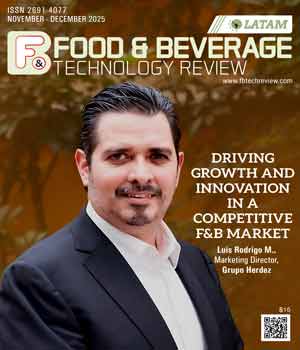
When F&B manufacturers bring products to market, they need certainty. Certainty that an açaí powder will keep its delicate vitamins, that a dehydrated strawberry will deliver the taste and crunch of fresh fruit and that a soup mix developed in Brazil will clear U.S. regulatory standards. For over six decades, Liotécnica, a specialist in food ingredient innovation and drying technologies with a strong emphasis on natural, high-quality solutions, has delivered that certainty Founded in 1964, the company offers the full spectrum of dehydration with Brazil’s largest freeze-drying capacity alongside vacuum, hot-air and spray drying. This breadth allows brands to balance performance and cost because each drying method affects products differently. Freeze-drying best preserves delicate nutrients and textures but costs more. At the same time, hot-air or vacuum-dried formats work well for applications with tight margins and spray-dried powders excel for instant beverages and flavorings. Whatever the method, the goal is to extend shelf life beyond 12 months while preserving nutrition, flavor and texture. “Drying is not just about removing water. It is about protecting what makes each ingredient valuable,” says Federico Alfredo Kladt Kladt, director of R&D, innovation and regulatory affairs. Beyond dehydration, Liotécnica leveraged its moisture control and ingredient processing expertise to become one of South America's few malt extract producers. It operates a dedicated facility that supplies high-quality extracts to enhance bakery and chocolate products, adding texture in crackers and masking offnotes in cocoa. A third factory produces instant jellies, beverages, soups and nutrition programs, with global leaders like Herbalife relying on Liotécnica to supply entire product lines. These pillars, dehydration, malt extract and dry mixes, position Liotécnica as a partner in multiple categories. What sets Liotécnica apart is its flexible contract manufacturing model. Some clients arrive with an idea, relying on the R&D team to develop formulas, source raw materials and packaging, and manage production and regulatory approvals. When clients are uncertain about technical choices, it advises which drying method works best for their product. Others bring established recipes and count on it for confidential, consistent manufacturing. For proprietary formulations, Liotécnica signs NDAs, treating client recipes with the same security as their own IP. A U.S. client once envisioned a soup that could retail for just one dollar, an ambitious target requiring careful ingredient selection and process optimization. Liotécnica handled the entire process from developing the formulation, producing samples, refining the recipe through several rounds of feedback, designing English- language packaging in Brazil, and navigating regulatory approvals for entry into the U.S. market. Today, that soup sits on American shelves.
CXO INSIGHTS
Sustainable Livestock Farming: Technology And Innovation In Control Of The Chain
Tamara Lopes, Corporate Executive Sustainability Manager, Minerva Foods

Unleashing the Power of Human Leadership: A Magnetic Force for Talent
Martin Venegas, Director of Manufacturing, The Hershey Company

Managing Food Safety and Quality
Jader Rossi, Director of Quality, Carrinho Group

Keeping-Up with the Dynamic IT Industry
Tonon Leandro, Corporate Chief Information Officer, Pronaca
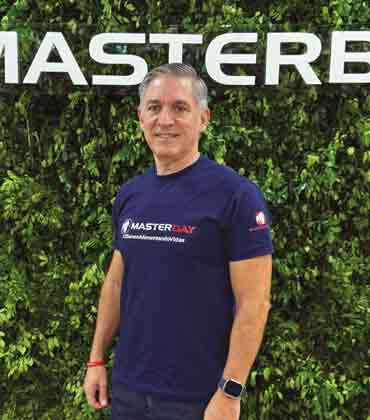
The Path to Technological Leadership in Food Processing
Washington Franco, IT Director, Masterboi

BRF Bets on Digital Transformation to Become Simpler and More Efficient
Antonio Cesco, Global Director of Technology and Digital Transformation, BRF
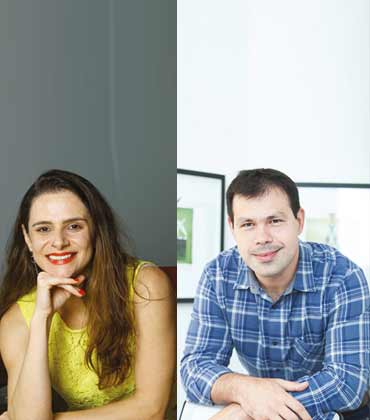
Sustainable Agriculture
Janaina Padoveze, Sustainability manager and Thiago Miqueleto, Head of Marketing & Business Intelligence, Ajinomoto do Brasil
IN FOCUS
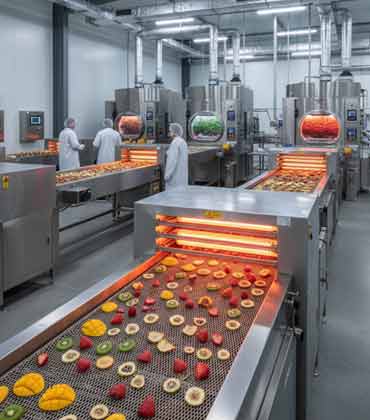
Cultivating Consumer Trust in Latin America's Dehydrated Food Supply Chains
The Latin American dehydrated food sector is experiencing growth amid rising consumer demand for transparency, nutrition, and sustainability, making trust essential for fostering brand loyalty and achieving long-term success.
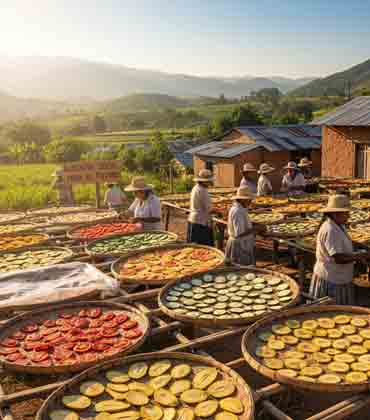
Dehydration as a Climate-Resilient Food Preservation Strategy for Latin American Markets
Dehydration enhances food security in Latin America's emerging markets by preserving harvests, reducing waste, and enabling access to nutritious food amid climate challenges.
EDITORIAL
Reinventing Food Security through Dehydration Innovation
Food dehydration technology is redefining how the world preserves and consumes food. What began as an age old preservation method has evolved into a sophisticated process that maintains flavor, texture and nutrients while extending shelf life. With growing concerns over food waste and sustainability, dehydration stands out as a technological and environmental solution.
Modern dehydration systems use advanced temperature control, vacuum drying, and solar-assisted techniques to retain nutritional value while reducing energy consumption. These innovations make it possible to process surplus produce efficiently, supporting farmers, food manufacturers and consumers alike. Beyond preservation, dehydrated foods are shaping new markets in health snacks, emergency rations and space nutrition.
As global supply chains face rising pressures, dehydration technology offers resilience, transforming perishable goods into storable, transportable and affordable products. However, continued progress depends on scaling energy-efficient methods and ensuring access for small and medium enterprises.
Food dehydration is no longer just a way to prevent spoilage; it is a cornerstone of modern food security and sustainability. By embracing this technology, the world can make meaningful strides toward reducing waste, supporting nutrition and ensuring that no harvest goes to waste.
In this edition, we explore how advancements in food dehydration technology are driven by precision engineering, energy-efficient systems, sustainable processing, and nutrition-focused innovation, each contributing to longer shelf life, reduced waste, and improved food security. Together, these developments signal a forward-looking vision for how technology can redefine global food preservation and sustainability.
We also present insights from expert CXOs, including Francisco Rovira, Head Supply Chain / NCE Champion / NBE NiM Integration Lead Peru-Bolivia at Nestlé, and Washington Franco, IT Director at Masterboi, who offer their perspectives on current business practices. We hope the valuable insights from industry leaders, along with the solutions and services featured in this edition, will help you make informed decisions for your business.

Top
