
Food Cooling Technologies in Europe

Food cooling technologies help producers and processors control product temperature during preparation, storage and distribution. With a focus on cooling speed, energy efficiency, food safety and equipment reliability, they support better product quality and more dependable cold chain performance.

NATfresh: Cooling that Preserves Freshness, Weight and Shelf Life
NATfresh
Cooling that Preserves Freshness, Weight and Shelf Life
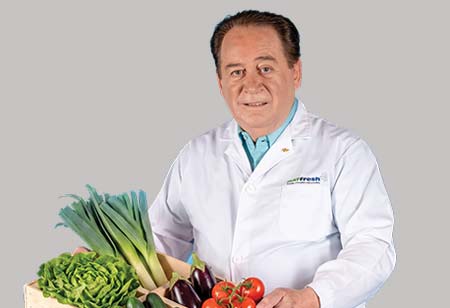
Philippe Vitel, Co-Founder, Inventor, Mechanical Engineer, Head of Technology and Production
Freshness fades gradually, almost imperceptibly at first, yet the cost begins the moment food leaves its point of origin to be cooled and prepared for transportation. A lettuce head cut in the field, grapes waiting before pressing, fish landed at the harbour, meat moving through a processing line and meals prepared in commercial kitchens all remain biologically active after production. They continue to release heat, shed moisture and deteriorate. As internal cell water pressure weakens, texture softens, flavour loses definition, weight declines and shelf life shortens.

Cooling That Leaves The Product Intact

Cooling that looks acceptable on an energy sheet can still punish the product in the crate. Leafy vegetables lose weight, fresh cuts soften, cooked batches wait too long before packing and insects can turn export stock into rework. Executives evaluating food cooling technology have to look past the target temperature. The sharper test is whether the process removes heat without stripping moisture, bruising texture, slowing dispatch or adding chemical intervention.

Why Restaurant Technology Should Be Designed For People, Not Just Performance
Apicii Hospitality
Why Restaurant Technology Should Be Designed For People, Not Just Performance
Brianne (Lane) Harvey, Director of Process + IT

Brianne (Lane) Harvey is a restaurant technology leader with 20+ years at the intersection of operations, systems, and scale. A CTO, SaaS founder, and digital transformation advisor, she helps hospitality businesses implement people-first technology that drives efficiency, empowers teams, and delivers sustainable growth without losing the human core of hospitality.

Food Cooling Technologies in Europe Info

Q1
What Does Food Cooling Technology Do?
Food cooling technology removes heat from food after processing, harvest or preparation to bring products to the required temperature. The process can support fresh produce, meat, seafood, prepared foods, dairy products and other temperature-sensitive foods. Depending on the application, cooling may take place before storage, during processing or ahead of transportation. Top Food Cooling Technology is designed to cool products quickly and consistently while limiting issues such as moisture loss, quality deterioration and delays between processing stages.
Q2
What Is Included In Food Cooling Technology?
Food Cooling Technology covers several methods, including forced-air cooling, vacuum cooling, chilled-water systems, refrigerated rooms, plate cooling and cryogenic methods. The right approach depends on factors such as the food being handled, its starting temperature, moisture content, packaging and production volume. Cooling systems can also differ in how they control airflow, humidity, energy use and temperature uniformity. Top Food Cooling Technology should fit the product and process rather than simply provide a high cooling rate.
Q3
Why Is Demand For Food Cooling Technology Growing?
Demand for Top Food Cooling Technology is tied to the need to protect food quality while products move through processing, storage and distribution. Faster cooling can help reduce deterioration and support more consistent handling of temperature-sensitive products. Food businesses also have to consider waste, energy consumption and the time required to move products through a facility. Growth in fresh-food distribution, prepared foods and temperature-sensitive supply chains can increase the need for dependable temperature control across the cold chain.
Q4
How Are Food Cooling Technologies Evaluated?
Cooling speed is only one part of the decision. Food processors may look at temperature uniformity, throughput, energy consumption, hygiene, maintenance requirements and compatibility with existing equipment. Top Food Cooling Technology also needs to perform consistently under actual production conditions, where batch sizes, packaging formats and incoming temperatures can vary. Operating requirements matter too. Cleaning procedures, labor, service access and potential downtime can affect the overall suitability of a cooling system long after installation.
Q5
How Can Top Food Cooling Technology Create Value?
Effective cooling can help protect product quality while reducing losses linked to excessive heat, deterioration or inconsistent temperature control. Top Food Cooling Technology may also help shorten processing cycles and make production schedules easier to manage when cooling is a limiting step. Maintaining product condition during storage and transportation can further support quality across the cold chain. The practical benefit depends on how well the cooling method matches the food, production process and required temperature rather than on cooling speed alone.
Q6
What Role Do Technology And Expertise Play In Food Cooling?
Technology can improve the speed, consistency and control of food cooling. Top Food Cooling Technology may draw on refrigeration, sensors, automation, airflow management, humidity control and process monitoring to maintain suitable conditions. Expertise is just as important because different foods respond differently to cooling. Factors such as heat transfer, load density, packaging, sanitation and production flow can affect results. A system that works well for one product or facility may not produce the same results elsewhere, making process knowledge an important part of choosing and applying cooling technology.
Top